
What to Do Before the Plumber Arrives
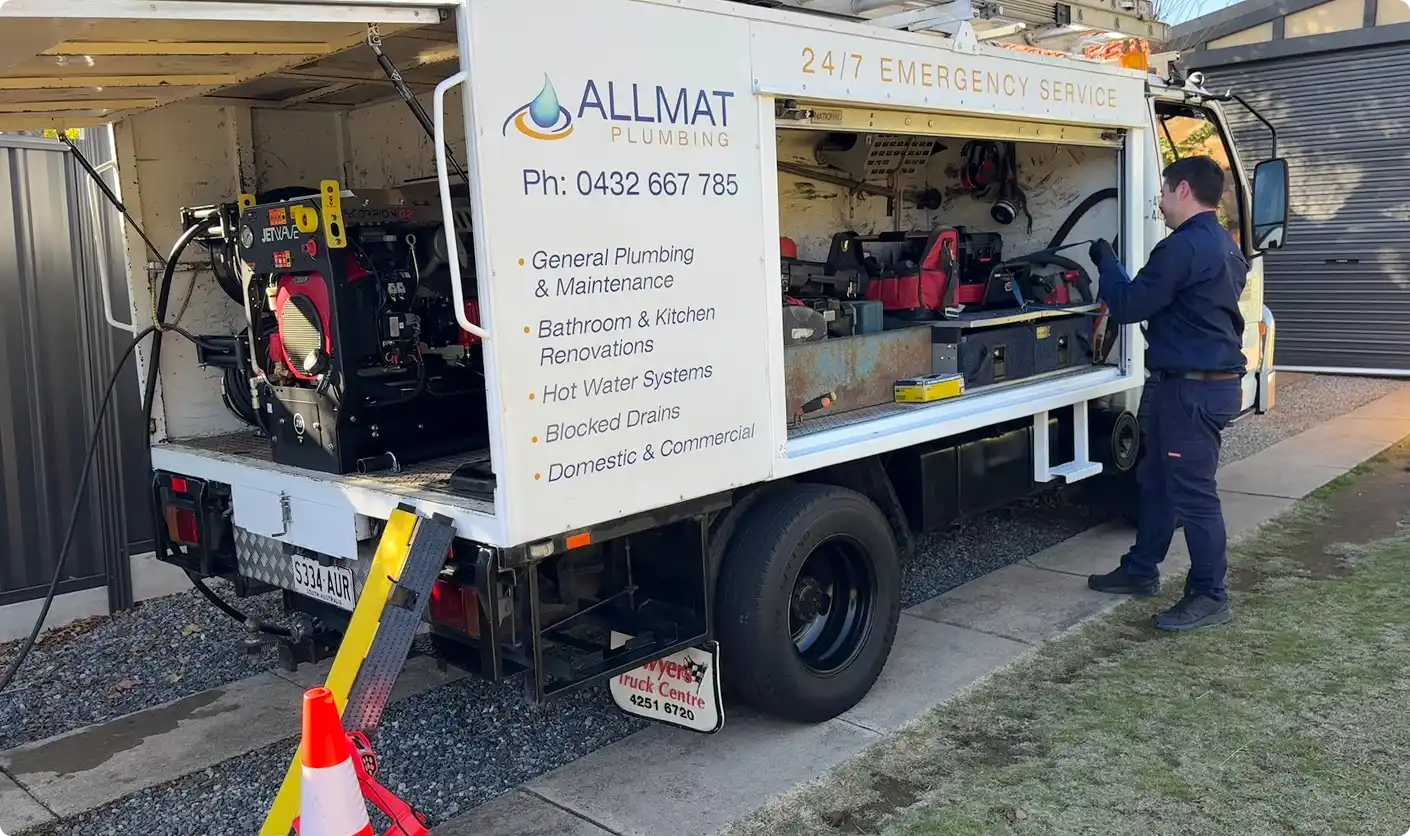
Stop the water first. That is the mains tap in the meter box at the front boundary, or the isolating valve under the fixture if the leak is at a single point. Make the area safe by switching off power to any wet room and killing the circuit for an electric hot water unit. Photograph the damage before you mop, because your insurer will ask. Then clear the access: empty the cupboard under the sink, unlock the side gate, secure the dog and leave a parking space out the front. Those 10 minutes shorten the visit and give the job its best chance of finishing on the first attendance.
Need this sorted rather than explained? Emergency Plumbing in Adelaide. Also worth reading: How to Turn Off Your Water Mains in Adelaide · Are Flushable Wipes Really Flushable? What Adelaide Drains Show
The first 2 minutes: stop the water
Water damage is measured in minutes, not litres. Almost everything expensive about a burst flexible hose or a split pipe happens in the time between the failure and someone closing a valve, so this comes before the phone call, not after it.
There are 3 levels of isolation, and using the smallest one that works keeps the rest of the house in water while you wait.
- The fixture stop tap. Under a basin, a vanity or a toilet cistern there is usually a small chrome tap on the supply line. Turn it clockwise. That isolates the fixture and nothing else.
- The mains tap. In the water meter box at the front boundary, on the house side of the meter. A straight lever is a ball valve and needs a quarter turn. A T-shaped handle or a round wheel turns clockwise, and the wheel needs several full turns.
- The hot water unit. Its own cold water inlet has an isolating valve, usually at the top of the unit. Closing that stops a leaking tank refilling itself.
Confirm it worked rather than assuming. Open the garden tap at the front of the house: the flow should fall away and stop within a few seconds. Never force a handle that will not move, because an old brass stem that snaps cannot be closed at all, and at that point only SA Water can stop the water.
Make it safe: power, gas and standing water
The second job is making sure nobody gets hurt while waiting. These take under a minute between them.
- Water near electricity. If water is running near a power point, a downlight or across a floor you have to walk over, switch off the relevant circuit at the switchboard. If the switchboard itself is wet, do not touch it and call an electrician.
- Electric hot water. If the tank is leaking or has drained, switch off its circuit breaker. An element left energised in an empty tank burns out in minutes and turns a repairable unit into a replacement.
- Gas. If you can smell gas, turn it off at the meter, open doors and windows, do not operate any switch or appliance, and get everyone outside before making the call.
- Ceilings. Plasterboard bulging with water is a collapse risk. Stay out of that room and keep children and pets out of it.
- Standing water. It is slippery, and if it has come back up through a floor waste or a gully it is waste water and a health issue. Keep everyone out of it and do not run any appliance that discharges into a drain that is already backing up.
Photograph it before you clean it up
The instinct is to mop. Take 60 seconds of photographs first, because once the water is gone the evidence is gone with it, and a home insurance claim turns on evidence and timing.
- Wide shots showing the room and how far the water travelled, then close shots of the source.
- The failed component itself where it is visible: the split flexible hose, the corroded fitting, the gully surcharging in the yard.
- A short video with the sound on if water is still running. It dates and evidences the event better than any still image.
- The water meter reading, if a hidden leak is suspected. A reading now and a reading in an hour with every tap off is the fastest proof a leak exists.
- Written notes: when it started, what you did, and in what order. Made at the time, they are worth far more than a recollection 3 weeks later.
Most home policies treat a sudden escape of water differently to a gradual leak, so the first question an insurer asks is when it started and how quickly it was stopped. Keep the photographs with the plumber's invoice and any written report. Together they answer the claim in a single email.
Clear the access, because this is the part you control
This is the single biggest thing you can do for the visit. Time on site is what you are paying for, and clearing the access yourself removes 10 or 15 minutes of it before anyone picks up a tool. On the narrow allotments through Goodwood, Unley, Black Forest and Norwood, access is frequently the difference between a comfortable job and an awkward one.
- Empty the cupboard under the sink or vanity. The cleaning products, the bin and the bucket all have to come out before anyone can get their head and shoulders in there.
- Find the water meter and clear the lid: leaves, soil, mulch, and whatever has been parked on top of it.
- Unlock the side gate. On a typical inner-south block the sewer inspection point, the hot water unit and the gas meter are all down the side passage.
- Uncover the overflow relief gully if you know where it is. It is the grated riser near the back or side of the house, and on older properties it is often hidden under a pot plant, a paver or a garden bed added decades later.
- Secure the dog. No slight on the dog: it is a plumber crouched at ground level with an open bag of tools.
- Leave a parking space out the front where you can. Streets through the inner south fill up, and a truck carrying a jetter needs to be near the job rather than around the corner.
- Clear the path to the switchboard and to the hot water unit, including anything stacked against them.
Have these details ready when you call
A precise 30 seconds on the phone decides which parts are on the vehicle when it arrives, and that decides whether the job finishes on the first visit.
- What is happening in plain terms: which fixture, how long it has been going on, and whether water is running right now.
- Whether it affects the whole house or a single point. That answer changes the diagnosis more than anything else you can say.
- The rough age of the house. A 1920s bungalow and a 2015 townhouse fail in completely different ways, and the plumber is already narrowing it down as you speak.
- For hot water: the brand, the model and the date off the compliance plate on the side of the unit. Photograph the plate and send the picture through.
- For a blocked drain: whether the overflow relief gully outside is surging, and whether more than a single fixture is affected. Those 2 answers separate a local blockage from a main sewer blockage.
- Anything that recently changed: a new bathroom, a new dishwasher, a landscaping job, a tree taken out, a driveway poured. The trigger is usually the last thing that changed.
- The address with a cross street, and where to park.
What not to do while you wait
- Do not pour drain cleaner into a blocked drain. Caustic product sits in the standing water rather than reaching the blockage, it will not touch a root mass or a collapsed pipe, it attacks older pipework, and it burns the person who opens the line. It also coats a camera lens, which is how a supermarket product turns into a delayed diagnosis.
- Do not keep flushing a blocked toilet to see whether it has cleared. Every flush puts several more litres into a pipe with nowhere to put them.
- Do not plunge a toilet that is already full to the rim.
- Do not run the washing machine, the dishwasher or a long shower while any drain is backing up. All of it discharges into the same line, and the surplus comes up at the lowest point in the house.
- Do not dismantle a tap or a cistern you cannot reassemble. A dripping tap can wait until Tuesday. A tap in pieces cannot, and a job that could have been booked in has just become an after-hours call-out.
- Do not tamper with a hot water unit's relief valve or with any gas appliance. Both are licensed work, and both are licensed work for good reasons.
- Do not clean up waste water without gloves. Sewage carries bacteria and it is not an ordinary spill.
By emergency: the 60 second version
| What is happening | Do this first | Then |
|---|---|---|
| Burst pipe or flexible hose, water running | Mains tap off at the meter box | Kill the power to any wet room, photograph it, move contents clear of the water |
| No hot water, no leak | Check the circuit breaker, or check whether the pilot has gone out | Photograph the compliance plate and send the brand, model and date through |
| Hot water unit leaking | Close the cold inlet isolating valve, switch off the unit's power or gas | Photograph the plate and the leak point, keep the area around the unit clear |
| Blocked toilet, water rising | Stop flushing, close the cistern stop tap | Stop using every other fixture in the house until it is looked at |
| Waste water surging from the gully outside | Stop all water use inside, keep everyone away from it | Clear access to the gully and to the sewer inspection point |
| Smell of gas | Gas off at the meter, windows open, everyone outside, no switches touched | Make the call from outside the house |
| Water pooling at the front boundary | Work out which side of the water meter it is coming from | On the street side it is SA Water's responsibility, so report it to them |
The whole list takes about 10 minutes and it pays twice. The visit is quicker, and the price is discussed with you before any work starts, so there is nothing to find out at the end. Marc texts an arrival time before setting off, so you know exactly when to have the gate unlocked, the cupboard emptied and the dog inside.
Questions we get asked
What should I do before the plumber arrives?
Isolate the water at the fixture stop tap or at the mains tap in the meter box, switch off power to any wet area and to a leaking electric hot water unit, and photograph the damage before you mop it up. Then clear the access: empty the cupboard under the sink, uncover the meter box, unlock the side gate, secure the dog and leave a parking space. Have the age of the house, the brand and model of any appliance involved, and a clear description of what is happening ready for the phone call.
Should I turn the water off before the plumber gets here?
Yes, if water is escaping. Use the smallest isolation that solves it: the stop tap under the fixture keeps the rest of the house in water, and the mains tap in the meter box stops everything. If you cannot find or turn the valve, say so on the phone rather than forcing it. A brass stem that snaps under pressure cannot be closed at all, and then the only people who can stop the water are SA Water.
Should I try drain cleaner before calling a plumber?
No. Caustic drain products sit in the standing water above the blockage instead of reaching it, they do nothing to tree roots or a collapsed pipe, and they damage older galvanised and clay pipework. They also create a genuine hazard for whoever opens the line, and they coat a camera lens so the inspection has to be repeated. Boiling water down a kitchen drain is a reasonable thing to try on a soft grease blockage. Chemicals are not.
Do I need to be home when the plumber arrives?
For most jobs yes, because decisions get made on site: which repair, and whether to proceed. Where the work is outside and access is arranged, it can sometimes be done without you, provided the price is discussed in advance and there is a way in. What matters either way is that someone is reachable to approve a change of scope, because we confirm any variation with you before carrying on.
What information does the plumber need on the phone?
Which fixture is affected, how long it has been happening, whether it is the whole house or a single point, and whether water is running right now. For hot water, the brand, model and date from the compliance plate. For a blocked drain, whether the overflow relief gully outside is surging and how many fixtures are affected. Add the approximate age of the house and anything that recently changed. That detail decides which parts are on the vehicle before it leaves.
What if the leak is on SA Water's side of the meter?
Then it is not your repair and it should not be your bill. SA Water is responsible for the main and the connection up to and including the meter, and everything on the house side of the meter belongs to the property owner. If water is surfacing near the front boundary, work out which side of the meter it is coming from before booking anything, and report it to SA Water if it is on the street side.
References
You might also find this useful
- Emergency PlumbingEmergency plumbing across Adelaide, 24/7. Burst pipes, sewage backing up, gas leaks and failed hot water, attended by a licensed plumber and gas fitter with the price discussed before work starts.
- How to Turn Off Your Water Mains in AdelaideWhere the mains tap is on an Adelaide property, how to identify the valve you are looking at, and the 5 second test that proves the water is actually off.
- Are Flushable Wipes Really Flushable? What Adelaide Drains ShowToilet paper falls apart in minutes. Wipes labelled flushable do not. Here is what the testing found, why Adelaide clay sewers catch them so reliably, and how to tell a wipe blockage from a root blockage.
- Ceramic Disc vs Washer Taps: Which Actually Lasts LongerCeramic disc cartridges outlast jumper valve washers on paper. Repairability, Adelaide water quality and whether the spare part still exists are what decide which tap is actually the better one to own.