
Leaking Taps Adelaide: Why the New Washer Did Not Fix It
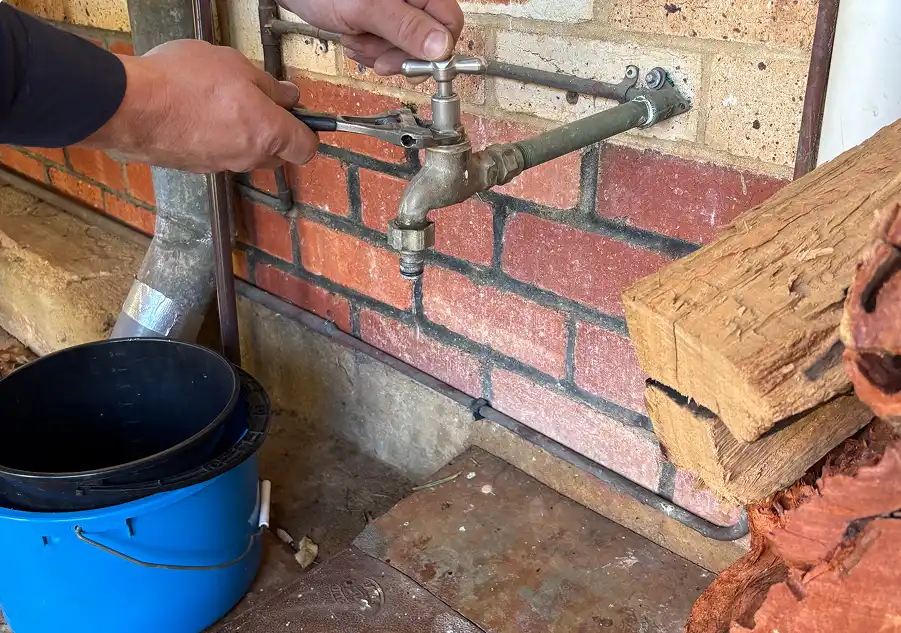
A dripping tap is one of 3 things. On a multi-turn tap it is the rubber washer on the jumper valve, or more often the brass seat underneath it that has pitted and now cuts every new washer within months. On a quarter-turn tap it is the ceramic disc cartridge, which is replaced rather than repaired. On a mixer it is the cartridge inside the body. Water escaping from under the handle instead of the spout is an O-ring or gland, which is a different repair again. Nearly all of it is fixed in a single visit without opening a wall.
Related: General Plumbing & Maintenance · Leak Detection · Toilet Repairs
Work out which tap you have, because it decides everything
Every meaningful decision about a leaking tap follows from what is inside it, and you can identify that from the handle without any tools. Turn the tap on and count how far the handle travels before the water is at full flow.
| Tap type | How you recognise it | What fails | The repair |
|---|---|---|---|
| Multi-turn washer tap | The handle turns 2 or 3 full rotations from off to full flow | The rubber washer on the jumper valve, and the brass seat it lands on | New jumper valve, and the seat recut if it has pitted |
| Quarter-turn ceramic disc tap | The handle stops dead after a 90 degree turn | Ceramic discs scored by grit, or the cartridge O-rings | The cartridge is replaced as a unit. Discs are not serviceable. |
| Single lever mixer | A single handle controls both flow and temperature | The mixer cartridge, typically 35mm or 40mm diameter | Cartridge replaced. Matching diameter and brand is what matters. |
| Wall-mounted tap set | The handles come out of a tiled wall, spout separate | The wall top assembly. The tap body behind the tiles rarely fails. | Wall top assemblies unscrew and replace without opening the wall |
That last row is the one that saves the most money and causes the most unnecessary panic. Homeowners assume a leaking wall tap means tiles coming off. In the overwhelming majority of cases the tap body sitting in the wall is sound brass doing nothing but holding a thread, and only the spindle assembly screwed into it has worn out. Those assemblies come out with a spanner from the front.
Where the water escapes tells you what has failed
- Dripping from the spout with the tap firmly closed: the washer, jumper valve or ceramic disc has failed. The valve is no longer sealing against the seat.
- Water weeping from under the handle only while the tap is running: the O-ring or gland on the spindle. The valve still seals fine, the seal around the moving shaft does not.
- Water seeping around the base of the tap where it meets the sink or bench: the body O-ring or the flange seal. Common on kitchen mixers, and it usually shows up as a damp cupboard before it shows on the bench.
- Damp appearing in the wall or on the skirting behind a wall-mounted set: this is the one that matters. The tap body, its connection to the copper, or the pipework behind it is leaking into the cavity, and that needs finding rather than guessing.
- A mixer that drips from the spout while the lever is fully off, with hot and cold both closed: the cartridge. Not a washer, and there is nothing serviceable inside it.
Why a brand new washer drips again 6 weeks later
This is the single most useful thing on this page, and it is why so many homeowners conclude their taps are beyond help after doing the job themselves correctly.
A washer does not seal against nothing. It seals against a machined brass seat inside the tap body. Over years, 2 things wreck that seat: grit and scale travelling down the line score it, and the previous washer, hardened by age, gets ground into it every time somebody cranks the tap shut. What you end up with is a seat that is no longer flat. Fit a soft new washer onto a pitted seat and the high spots cut into it immediately. It seals beautifully for a few weeks while the rubber conforms, then it drips again, usually worse than before.
The fix is to recut the seat with a reseating tool, which machines the brass flat again, or to fit a seat insert where there is not enough brass left to cut. It takes a few minutes per tap and it is the difference between a repair that lasts years and a repair that lasts until the next season. We reseat as part of every rewasher, which is why the repair holds.
The same chemistry explains 2 other complaints we get called about. A tap that has slowly lost pressure while everything else in the house is fine is usually a scaled aerator, which unscrews and cleans in a couple of minutes. A tap that screams or whistles as it is opened is a worn or loose jumper valve vibrating against the seat, which is a repair rather than a curiosity.
Repair or replace, and when we tell you to do neither
Replacing a whole set of taps feels like the decisive move, but the honest position is that most tapware is worth repairing and only some of it genuinely is not.
- Repair when the body is solid brass and the chrome is intact. Quality Australian tapware routinely outlives 4 or 5 sets of internals, and rewashering a sound set is a fraction of replacing it.
- Repair when the tap is a mainstream brand with catalogued cartridges. Cartridges for the common ranges are stocked in Adelaide and fitted the same visit.
- Replace when the tap body itself is corroded, when the chrome is flaking and lifting, or when the spindle thread has stripped so nothing will tighten against it.
- Replace when the tap is an unbranded import with a proprietary cartridge that is no longer made. These appear constantly in properties renovated about 15 years ago, and there is nothing to fit into them.
- Replace when a mixer body is cracked. A hairline crack in a mixer body under mains pressure is not a repair candidate.
Coastal properties are the exception worth flagging. In Glenelg, Somerton Park, Hove and Brighton, salt air attacks chrome and external fittings far faster than it does 10km inland. Garden taps, outdoor showers and exposed fittings there reach the end of their life on the outside long before the internals wear out, and replacement genuinely is the right answer more often than it is in Unley or Mitcham.
What a dripping tap is quietly wasting
A steady drip of roughly 1 per second works out at somewhere around 15 to 20 litres a day, which is thousands of litres across an SA Water billing year. A hot tap doing the same thing adds the energy to heat every litre of it, so a dripping hot tap wastes more than a dripping cold one.
It is also worth having every dripping tap in the house looked at on the one visit rather than booking them one at a time, because the first tap carries the attendance and the rest are quick once the tools are out.
What we do on a tap job
- Confirm an arrival time by text before setting off, so nobody spends a morning waiting on a 4 hour window.
- Identify the valve type at each tap and check the body, chrome and thread condition before quoting anything.
- Discuss the price with you up front, including which taps are being done and whether any are better replaced than repaired.
- Isolate the water. On most Adelaide homes that is the stop tap at the meter, and on properties with individual fixture isolation it is the mini tap under the fixture.
- Strip the tap, inspect the seat, recut it or fit a seat insert, and fit the new jumper valve or cartridge.
- Reassemble, restore pressure gradually so the line does not hammer, and test each tap under full flow and full closure.
- Check the aerator and clean it while everything is apart, because it takes a minute and it is the other half of most flow complaints.
Marc is a licensed plumber and gas fitter with 20 years on Adelaide housing stock, and he does the work himself. The price discussed at the start is the price on the invoice.
Questions we get asked
Why does my tap still drip after I put a new washer in it?
Because the seat was never recut. The washer seals against a machined brass seat inside the tap body, and years of grit, scale and hard closing leave that seat pitted. A soft new washer conforms to the damage for a few weeks, then the high spots cut through it and the drip returns. Recutting the seat with a reseating tool, or fitting a seat insert where the brass is too far gone, is what makes the repair hold. It is a short job, and skipping it is the most common reason a correctly fitted washer fails early.
Are ceramic disc taps better than washer taps?
They are different rather than strictly better. Ceramic discs seal metal-hard against each other, so they do not wear the way rubber does and they close in a quarter turn, which is easier on hands and on the pipework. The trade-off is that they are unforgiving of grit: a single particle can score a disc permanently, and there is no repair, only a new cartridge. Washer taps wear predictably and are serviceable indefinitely on a sound body, but they need rewashering more often and they are the ones that cause water hammer when the washer goes loose.
Can I change a tap washer myself?
On a standard multi-turn tap, yes, and it is a fair weekend job. Turn the water off at the meter first and open a low tap to drain the line, then note that the decorative cover and the spindle are separate components and neither should need force. The 2 things that catch people are removing the tap body itself rather than just the spindle, which opens a mains pressure line, and having no way to recut the seat, which is why the drip often comes back. If the tap is wall-mounted, is a mixer, or will not come apart with reasonable pressure, stop there.
Do I need the wall opened to fix a leaking wall tap?
Almost never. On a wall-mounted set the part that wears out is the wall top assembly, which is the spindle unit that screws into the tap body behind the tiles. It unscrews from the front with a spanner and is replaced as a unit. The tap body itself is brass and rarely fails. The exception is genuine damp appearing in the wall cavity or on the skirting with no drip visible at the tap, which is a concealed leak rather than a tapware fault and should be located properly before any tile comes off.
Why do my taps bang or hammer when I turn them off?
A worn or loose jumper valve is the most common domestic cause: the washer flutters against the seat as the tap closes and sets the water column vibrating. The other causes are unrestrained pipework in a wall or roof space, and quick-closing solenoid valves on appliances such as washing machines and dishwashers. Rewashering the offending tap fixes the first one, and it is worth ruling out before anyone starts talking about arrestors or repiping.
Why is a single tap much weaker than the rest of the house?
Check the aerator on the end of the spout first. Adelaide water leaves scale, and a partly blocked aerator strangles flow at that outlet while every other tap behaves normally. It unscrews by hand or with a cloth and cleans in vinegar. If cleaning it changes nothing, the likely candidates are a partly closed isolating tap under the fixture, a failing cartridge or jumper valve in that tap, or on older homes corroded galvanised supply pipe feeding that branch, which is a bigger conversation.
Is it worth repairing old tapware or should I replace the lot?
Repair a sound brass body with intact chrome, every time. Good Australian tapware outlasts several sets of internals, and rewashering is a fraction of the cost of replacing. Replace when the body is corroded, the chrome is lifting, the spindle thread has stripped, or the tap is an unbranded import with a cartridge that is no longer manufactured. In coastal suburbs such as Glenelg, Hove and Brighton, salt air degrades external fittings faster and replacement becomes the honest answer sooner than it does inland.
Suburbs we cover for leaking taps
You might also find this useful
- Ceramic Disc vs Washer Taps: Which Actually Lasts LongerCeramic disc cartridges outlast jumper valve washers on paper. Repairability, Adelaide water quality and whether the spare part still exists are what decide which tap is actually the better one to own.
- What Is Water Hammer, and Why Are Your Adelaide Pipes Banging?A bang after the washing machine stops is a pressure wave arriving, not a fitting coming loose. Here is what causes it in Adelaide homes, how to work out which cause is yours, and the fixes in order of how involved they are.
- Galvanised vs Copper Pipes: When Replacement Is Actually DueMost pre-1960s Adelaide homes were plumbed in galvanised steel, and it corrodes shut from the inside. Here is how to identify what you have, which symptoms genuinely mean the pipe, and how to stage the replacement without wrecking the plaster.
- Shocked by Your SA Water Bill? The 15 Minute Test That Finds the LeakA quarterly bill that doubles is either a leak or it is not, and there is a free 15 minute test that settles the question before anyone is paid to look. Here is the test, the arithmetic behind it, where Adelaide leaks actually hide, and how to tell when there is no leak at all.
- General Plumbing & MaintenanceEveryday plumbing and maintenance across Adelaide by a licensed plumber and gas fitter: taps, toilets, hot water, leaks, drains, gas and renovation rough-in, priced up front.
- Leak DetectionConcealed water leaks tracked down without guesswork. Meter testing, isolation and pressure testing, thermal imaging and moisture metering to narrow the search, and CCTV with a sonde locator on anything that drains.