
Leak Detection Adelaide: Find the Hidden Leak Before It Finds Your Slab
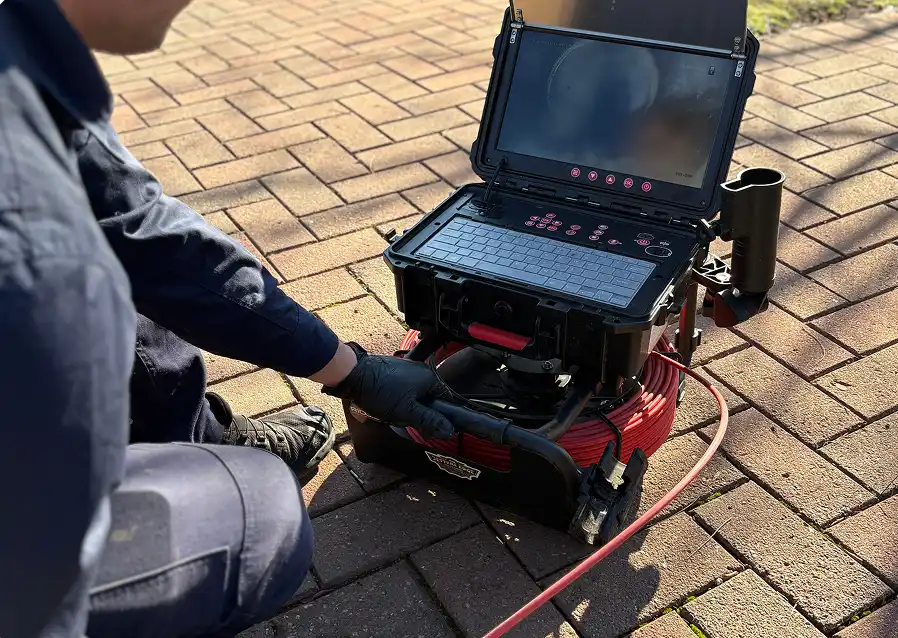
Start with the water meter, because it settles the question for free. Turn off every tap and appliance, read the meter, wait 30 minutes without using water, then read it again. Movement means water is escaping somewhere on your side of the meter. No movement means the high bill is usage rather than a leak, and paying for leak detection would be wasted money. Where the meter does move, isolation and pressure testing narrow it to a circuit and a section of the property, thermal imaging and a moisture meter narrow a hot water leak under a slab further to a small area of floor, and anything draining gets looked at on camera, so a repair opens the smallest area that will reach the pipe.
Related: Burst Pipes · Leaking Taps · CCTV Drain Inspection
Do the meter test first, before you call anyone
This takes half an hour and it tells you whether you have a leak. Do it before spending money on anybody, including us.
- Turn off every tap inside and out, and stop the washing machine, dishwasher, irrigation controller, pool auto-fill and evaporative air conditioner. A running toilet will show up as a leak, so deal with that first or allow for it.
- Find the meter, normally at the front boundary, and write down every digit including the small red or black ones. Those are litres, and they are where a slow leak shows.
- Look for the leak indicator: a small triangle, star or dial that spins on tiny flows. If it is turning with everything off, water is moving right now.
- Wait 30 minutes and use no water. Longer is better for a slow leak, and overnight is the definitive version of the test.
- Read the meter again. Any change with nothing running means water is escaping on your side of the meter.
- Narrow it down. Close the stop tap where the service enters the house, leaving the meter and the buried run still under pressure, and watch the meter again. A meter that keeps moving means the leak is out on the service line under the front yard, path or driveway. A meter that stops means it is inside the house.
Whose leak is it, yours or SA Water's
This decides who pays, and the boundary is simpler than most people expect. SA Water owns the water main in the street and the meter itself. From the outlet side of that meter onwards the pipework is the property owner's: the service line crossing the front yard, everything under the house, and every fitting inside it.
The same split applies to wastewater. The sewer main is SA Water's and the private drain from the house to the connection point is the owner's, which is why a fault on the private drain is a plumbing job while the identical fault 3 metres further along is a phone call to SA Water. Establishing which side of that line a fault sits on is part of the work.
Strata and unit properties add a layer. Where several dwellings sit behind a single meter, the leak can be on shared infrastructure and the cost sits with the body corporate rather than the resident whose bathroom is wet.
The signs of a concealed leak
Most concealed leaks announce themselves long before the bill does.
- A warm or hot patch on a tiled or concrete floor. That is a hot water line leaking under the slab, and it is the most reliable sign on this list.
- The sound of running water when nothing is on, most obvious at night, or pressure that has dropped across the whole house rather than at a single tap.
- A patch of lawn that stays green through an Adelaide February while everything around it browns off, or ground that is soft and never dries.
- Mould, blistering paint, lifting skirting or a musty smell in a room with no obvious water source.
- Tiles sounding hollow, a crack that keeps moving, or doors sticking on one side of the house only.
The last of those is why an under-slab leak is a structural issue and not just a water bill. Adelaide sits on reactive clay that swells when wet and shrinks when dry, and a footing system is designed around the soil beneath it moving more or less evenly. A leak keeps a single pocket of that clay saturated while the rest of the site dries through summer, and the differential movement that follows is what cracks slabs, jams doors and opens gaps at cornices.
How leaks are actually found
No single instrument finds every leak. The skill is matching the method to the pipe.
| Method | What it does | Where it works best | Where it does not |
|---|---|---|---|
| Pressure and isolation testing | Isolates sections and watches for pressure decay | Confirming a leak exists and narrowing it to a circuit | Pinpointing a location on its own |
| The meter test | Measures whether water is leaving the system at all | Settling whether there is a leak before anyone is paid to look | Telling you where the leak is |
| Ruling out the fixtures | Checks the things that leak silently and are not buried at all | Cisterns, mixers, flexible hoses, relief valves, irrigation solenoids | Anything inside a wall, a slab or the ground |
| Thermal imaging camera | Reads surface temperature and shows where a leak has warmed or cooled the surface above it | A hot water line under a slab, where the warm plume comes through the floor, and wet areas cooling by evaporation | Seeing through the floor or the wall, which it cannot do, and a cold water pinhole with no temperature contrast |
| Moisture meter | Measures how much moisture is actually in plaster, timber, screed and wall linings | Mapping how far water has tracked, and separating a wall that is wet now from an old stain that dried out | Locating the pipe, because it reads the building material rather than the leak |
| CCTV camera and sonde locator | Films inside a drain and marks its position and depth from the surface | Sewer and stormwater faults, cracked pipe, root intrusion | Pressurised supply lines, which the camera cannot enter |
A real job chains these rather than leaning on any one of them, and the order matters. The meter proves water is escaping, the fixtures get ruled out because a running cistern is a far commoner answer than a slab leak, and isolation and section pressure testing then prove which circuit and which stretch of pipe is losing it. Only then is there any point running the thermal camera across the floor for a warm plume or an evaporatively cooled patch, and walking the moisture meter along the wall linings and the screed to see how far the water has tracked. No instrument on that list is a magic box on its own. What narrows the search is running them in sequence, and that sequence is what keeps an opening to the smallest one that will reach the pipe.
What leaks in Adelaide homes, and where
Marc has spent 20 years across this housing stock, and what leaks where follows the build era more closely than the suburb.
- Pre-1940s villas and bungalows through Goodwood, Unley, Malvern and Norwood: galvanised steel supply pipe corroding from the inside. Failure is by pinhole, and pinholes arrive in clusters because the whole run is the same age.
- Interwar and 1950s to 1960s homes in Colonel Light Gardens, Cumberland Park, Panorama and Mitcham: first-generation copper at the end of its life, including the under-slab hot water line that presents as a warm floor and is the most expensive leak to ignore.
- Early polyethylene service lines from the 1970s and 1980s: brittle with age, failing at fittings and where they pass under a driveway.
- Coastal suburbs including Glenelg, Hove and Brighton: external fittings and garden taps corroding in salt air, plus a high water table that slows any excavation.
- Hills properties through Blackwood, Belair, Stirling and Aldgate: long private service runs from meter to house, buried joins under paving and driveways, and ground movement on steep reactive blocks. A leak 60 metres from the house shows nothing near the house.
The pattern that catches people out is the second failure. Once a galvanised or early copper system produces its first pinhole, the rest of that run carries the same age, water and wall thickness. Patching that first leak is correct in the moment, and it is also when the conversation about replacing the run should start.
When it is not a leak at all
Plenty of high water bills are not leaks, and a detection callout on a property with a still meter is money spent for nothing. We would rather say so here than take the booking.
- Evaporative air conditioning. Through an Adelaide summer these use serious volumes, and a stuck float or a badly set bleed turns that into a continuous run to the drain. Bills climb in December and January for this reason alone.
- Irrigation. A solenoid that does not fully close, a controller running 2 programmes it was never meant to, or a sub-surface line cut by a spade. That is real water use, fixed at the controller.
- A pool or water feature topping up, because evaporation over an Adelaide summer is significant and an auto-fill quietly covers it.
- A running toilet, the most common cause of a mysteriously high bill anywhere, and free to check with food colouring in the cistern.
- The billing period itself. A quarter with more days in it, or an estimated read followed by an actual read, both look like a leak and are not.
- A change in the household. Visitors, a new occupant, a new appliance. Unglamorous, and frequently the answer.
What happens on the day
Detection and repair are quoted separately, because until the leak is located nobody can price the repair honestly.
On the day, Marc texts an arrival time before setting off. The visit starts at the meter and the isolation points, because confirming the leak and identifying its circuit comes first. The location is then marked physically on the surface, and you are told what the repair involves and what it will cost before anything is opened up. Rerouting a line is sometimes the better answer than breaking a slab, and where that is the case we say so.
Questions we get asked
How do I know if I have a water leak?
Use the meter. Turn off every tap and appliance, including irrigation, the pool auto-fill and the evaporative air conditioner, then record every digit on the water meter. Wait 30 minutes using no water and read it again. Any movement means water is escaping on your side of the meter. Many meters also carry a small leak indicator triangle or dial that spins on very low flows, so if that is turning with everything off you have your answer immediately. Overnight is the more sensitive version of the same test.
Who is responsible for a water leak in Adelaide, me or SA Water?
SA Water is responsible for the water main and the meter. The property owner is responsible for all pipework from the outlet side of the meter onwards, which includes the service line crossing the front yard, everything under the house and every fixture inside. The same boundary applies to wastewater: SA Water owns the sewer main, the owner owns the private drain running to the connection point. Working out which side of that line a fault sits on is part of a proper investigation, because it decides who pays for the repair.
Can I get a high water bill reduced if a hidden leak caused it?
It is worth asking. SA Water has a process for reviewing a high bill, and where a concealed leak has been found and repaired promptly by a licensed plumber there may be relief available on the affected period. The criteria are set by SA Water and they change, so confirm the current position with SA Water directly rather than assuming. Keep the plumber's dated invoice and a written description of the leak and the repair, because that is the evidence any review will ask for.
Can you find a leak under a concrete slab without breaking it up?
Often the slab does not need to come up at all. Isolation testing establishes which circuit is losing water and narrows it to a section, and on a hot water line thermal imaging and a moisture meter then set the edges of the area worth opening, which is what makes a small opening realistic. On many jobs the better answer again is to abandon the failed run entirely and reroute the line through a wall or ceiling space, which avoids cutting the floor at all. Where the slab does have to be opened, the aim is the smallest opening that reaches the pipe. Which option wins depends on the pipe run, the floor covering and how many fixtures sit on that line, and it is a decision you make with the facts in front of you.
Does thermal imaging see through walls and floors?
It does not, and it is worth being clear about that before anyone books it expecting an x-ray. A thermal camera reads surface temperature and nothing else. What it actually shows is the heat, or the evaporative cooling, that a leak has transferred to the surface above it. On a hot water line under a slab that is genuinely powerful, because the warm plume comes up through the concrete and the tiles and draws a hot patch on the screen where the pipe is losing water. On a wet wall the reverse happens: the damp cools the surface as it evaporates and reads as a cold patch, which is where the moisture meter comes in to confirm the material is actually wet rather than just cool. What the camera cannot do is look through the slab at the pipe itself, and on a cold water pinhole with no temperature difference, or a leak deep enough that nothing reaches the surface, there is simply nothing for it to read. That is why it sits in the middle of a sequence, after the meter and the isolation testing, rather than at the start of one.
The meter moves, but only sometimes. Does that still mean a leak?
Usually it means something is cycling rather than running. A toilet inlet valve that refills every few minutes, an irrigation solenoid weeping, a hot water relief valve discharging as the tank heats, or an evaporative cooler topping up will all move the meter intermittently and then stop. Watch the meter over a longer window with everything off, and note whether the movement is steady or comes in bursts. Steady movement points at a buried leak, and bursts point at a fixture, which is a much cheaper thing to find.
My meter is turning but I cannot see any water anywhere. Where is it going?
Into the ground, under the slab or into a cavity, which is exactly why concealed leaks get expensive. Adelaide clay soils absorb a substantial volume before anything shows at the surface, so a leak on a service line can run for weeks with no visible sign beyond a patch of lawn that stays green. Close the stop tap where the service enters the house: if the meter keeps running, the leak is out on the service line between the meter and the house, and if it stops, the leak is inside.
Do you find gas leaks as well as water leaks?
Marc is a licensed gas fitter as well as a licensed plumber, so yes, gas leak testing and repair is within scope. Treat a suspected gas leak differently from a water leak, though. If you can smell gas, do not operate light switches or anything that could spark, open the doors and windows, turn the gas off at the meter if you can reach it safely, get everyone outside, and call your gas distributor's emergency line first. Once the site is safe, the fault gets pressure tested and located properly.
Suburbs we cover for leak detection
You might also find this useful
- Shocked by Your SA Water Bill? The 15 Minute Test That Finds the LeakA quarterly bill that doubles is either a leak or it is not, and there is a free 15 minute test that settles the question before anyone is paid to look. Here is the test, the arithmetic behind it, where Adelaide leaks actually hide, and how to tell when there is no leak at all.
- How to Turn Off Your Water Mains in AdelaideWhere the mains tap is on an Adelaide property, how to identify the valve you are looking at, and the 5 second test that proves the water is actually off.
- Galvanised vs Copper Pipes: When Replacement Is Actually DueMost pre-1960s Adelaide homes were plumbed in galvanised steel, and it corrodes shut from the inside. Here is how to identify what you have, which symptoms genuinely mean the pipe, and how to stage the replacement without wrecking the plaster.
- The 5 Silent Signs of a Gas Leak in Your Home, and What to Do FirstRotten egg odour, a hiss at a fitting, dead grass in a line, yellow flames and a bill that climbed. What each sign means, the order to act in, and the 3 things that smell like gas but are not.
- Burst PipesEmergency burst pipe repair across Adelaide, plus the honest call on whether the run needs replacing or just repairing. Galvanised, copper, poly and in-slab pipework, 24/7.
- Leaking TapsDripping spouts, weeping handles, screaming taps and failed mixer cartridges. Diagnosed by valve type, repaired properly, with the seat recut so it holds.