
Blocked Toilet Adelaide: Clear It Yourself, or Know When to Stop
A blocked toilet is either a blockage in the pan itself or a blockage in the drain beyond it, and 1 check separates them: flush once, then watch the shower or the floor waste. If only the toilet backs up, the blockage is in the pan or its trap, and a flange plunger clears most of those. If water rises in the shower or the gully gurgles, the drain is blocked further out and needs a machine. Stop flushing either way, because the second flush is what puts sewage on the floor.
Related: Blocked Drains · Toilet Repairs · Emergency Plumbing
The 1 test that tells you pan or drain
How urgent this is, what is involved and who fixes it all turn on a single question: is the blockage inside the toilet, or in the drain the toilet empties into. The test takes 2 minutes and needs no tools.
- Flush once, and once only. If the bowl rises to the rim then drains away slowly, the restriction is close.
- Listen at the shower while it drains. A gurgle there is air being dragged back through another trap, which happens when the shared drain is running full.
- Run the shower or a laundry tub for 30 seconds. Water appearing at the floor waste means the blockage sits downstream of both fixtures.
- Check the overflow relief gully, the open grated riser at ground level near the bathroom or laundry wall. Water standing in it confirms the sewer drain is blocked, not the toilet.
Only the toilet affected means the pan, its trap or the branch behind it, and that is a small job. Multiple fixtures, or a gully holding water, means the main sanitary drain and a machine. The 2 problems look identical from the doorway and are very different jobs to fix.
What actually blocks Adelaide toilets
A healthy pan on a healthy drain rarely blocks on paper alone. When one does block, the cause is usually on this list, and the cause points straight at the fix.
- Wet wipes, including everything labelled flushable. They do not break down, they rope together, and they catch on whatever is already in the pipe. This is the leading cause in Australian homes.
- Sanitary products, cotton buds, hair and dental floss. Floss is the quiet one: it blocks nothing by itself, it forms the net everything else builds on.
- Objects. Toys, phones, cleaning cloths and the plastic cages that hold cistern fresheners. If no water passes at all, an object is usually the answer, and plunging can drive it further into the branch.
- Scale in older vitreous china pans, where decades of hard water narrow the trap and the rim jets so gradually that nobody notices until the margin is gone.
- Tree roots in the sewer drain beyond the house. This one presents as a toilet problem and is not one.
What to try before you call anyone
If the test above pointed at the pan, work through this before you pay anybody. It clears the majority of blocked toilets and takes about 10 minutes.
- Turn off the cistern stop tap, the small isolating valve on the wall or floor behind the pan, so nothing refills while you work.
- Get the water to roughly half full, bailing with a cup if it is near the rim. A plunger needs water to push, not air.
- Use a flange plunger, the type with a soft rubber sleeve that folds out of the cup. The flat cup style is for sinks and will not seal a toilet outlet.
- Seat the flange fully, push the trapped air out with 1 slow stroke, then work firmly for 20 to 30 seconds without breaking the seal. The pull matters more than the push.
- Add a squeeze of dish detergent and a bucket of hot tap water, then wait 15 minutes. The detergent lubricates, the heat softens fats and paper.
- Plunge again. A level that drops away suddenly means it has cleared, so flush once and watch it fill and empty normally.
Stop and call at 3 points: nothing has moved after 2 rounds of proper plunging, you know a solid object went in, or another fixture is affected.
When it is not the toilet at all
A large share of the blocked toilets in the inner south are healthy pans on a failing drain. The bathroom is simply where the symptom shows first, because the toilet is the highest-volume fixture in the house. The giveaway is repetition: a pan blocked by an object blocks once, while a drain taking roots through an open clay joint blocks on a rhythm, clears easily, and blocks again months later.
- Original clay branch drains at shallow fall. Plenty of pre-1960s homes had the toilet outside or off the back verandah, and when it came inside during a renovation the new pan was connected to that original clay branch.
- Modern 4.5 and 3 litre dual-flush pans on drainage laid for an 11 litre single flush. Less water has to move the same solids down the same long run, and on a tired drain that is the difference between clearing and not.
- A rocking pan and a perished pan connector. Once the seal at the outlet goes, the joint catches paper on every flush and the blockage rebuilds itself.
- A dropped or collapsed section of clay drain. Adelaide sits on reactive clay that swells in winter and shrinks hard through summer, and a century of that works mortared joints apart.
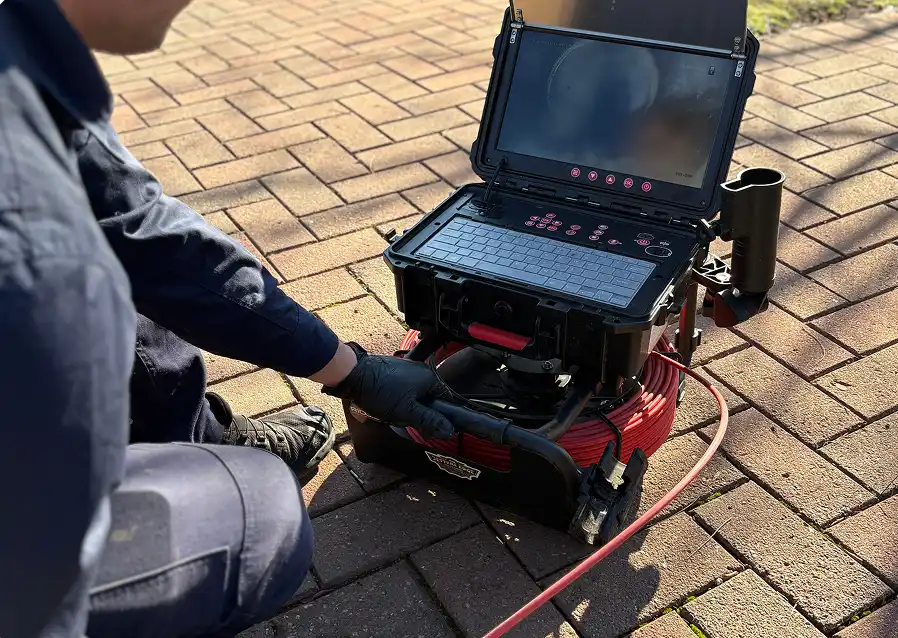
This is where a camera earns its keep. Clearing a drain tells you it was blocked. A CCTV inspection with a surface locator tells you why, exactly where and how deep, which is the only honest basis for recommending that you leave it alone, put it on a clearing cycle, or repair it.
You get a text with an arrival time before we set off, a price discussed before any work starts, and the cause explained rather than just the symptom cleared. Where the honest answer is that the pan is fine and the drain needs watching rather than repairing, that is what you will be told.
Other blocked drains pages
- Stormwater Drain Cleaning: High pressure jetting, pit clearing and CCTV inspection for blocked and broken stormwater drains. Roof water moved away from the house properly, which on Adelaide clay matters more than most people are told.
- Tree Root Removal: Root cutting, high pressure jetting and CCTV diagnosis for root-invaded sewer and stormwater drains, with a straight answer on whether a clearing cycle or a permanent repair is the better spend.
Questions we get asked
Will a blocked toilet eventually clear itself?
Often, and it is worth giving it the chance. A pan blocked by paper alone relaxes overnight as the paper breaks down and the head of water above it forces it through, which is why a toilet that is unusable at 10pm is frequently draining by morning. Turn off the cistern stop tap, leave it, and try in the morning. What will not clear itself is a wipe, a solid object, or a blockage in the drain beyond the house. Those get worse, because everything that follows adds to them.
Can I use drain cleaner or caustic soda in a blocked toilet?
No, and it is worse than doing nothing. A toilet trap holds standing water, so the product dilutes on contact instead of reaching the blockage, and what does reach it sits against the pan connector, the seals and the pipe wall for hours. It softens PVC branch drains, and it makes the job genuinely hazardous for whoever opens the pan next, which may well be you. Detergent, hot tap water and a flange plunger outperform it on every measure.
Why does my shower gurgle when I flush the toilet?
Because the shared drain is running close to full and pulling air back through the nearest available trap, which is the shower. It is an early warning rather than a fault at the shower, and it means the blockage sits downstream of both fixtures. Act on it while the drain still empties. The next stage of the same problem is water standing in the shower base and surcharge at the overflow relief gully.
Is a blocked toilet my responsibility or SA Water's?
The private sanitary drain from the fixtures to the property boundary is the owner's responsibility, which covers nearly every blocked toilet. SA Water is responsible for the sewer main and the connection at the boundary. If a blockage is found on the SA Water side, that becomes their repair, which is exactly why locating the defect from the surface matters before anyone quotes excavation. Tenants should report a blockage to the agent or landlord rather than arranging the work themselves.
The toilet is the only one in the house. How fast can you get there?
A blocked toilet with no second bathroom is treated as urgent, and Allmat works a tight radius around Westbourne Park, so the inner south is a short trip rather than a cross-town run. The Adelaide Hills are covered too and are a genuine drive. Either way you get a text with a realistic arrival time before we set off, so you know whether to wait or make other arrangements.
Suburbs we cover for blocked toilet
You might also find this useful
- Are Flushable Wipes Really Flushable? What Adelaide Drains ShowToilet paper falls apart in minutes. Wipes labelled flushable do not. Here is what the testing found, why Adelaide clay sewers catch them so reliably, and how to tell a wipe blockage from a root blockage.
- The Overflow Relief Gully: What It Is, and Why Yours Is BlockedAn overflowing ORG is not a fault, it is the safety valve doing its job. What to do in the first 5 minutes, how to check yours is installed legally, and who pays for the blockage.
- Why Your Toilet Cistern Keeps Running, and How to Stop ItA running cistern is 1 of 2 faults, and a few drops of food colouring will tell you which in 20 minutes. The Australian drop valve, the inlet valve, and how much water it is wasting.
- Why Is My Kitchen Sink Gurgling When I Flush the Toilet?The gurgle is air being pulled through a trap seal. Which fixture makes the noise, and which fixture triggers it, tells you whether you are dealing with a free fix under the sink or a root-blocked sewer near the boundary.
- Blocked DrainsBlocked sewer, toilet, sink and stormwater drains cleared across Adelaide with a jetter and an electric machine, then filmed with a CCTV camera so you find out what caused it.
- Toilet RepairsRunning cisterns, leaking pans, weak flushes and broken buttons. Nearly all of it is a valve or a seal, diagnosed properly and fixed in a single visit.