
Stormwater Drain Cleaning Adelaide: Clearing Silt, Roots and Collapsed Lines
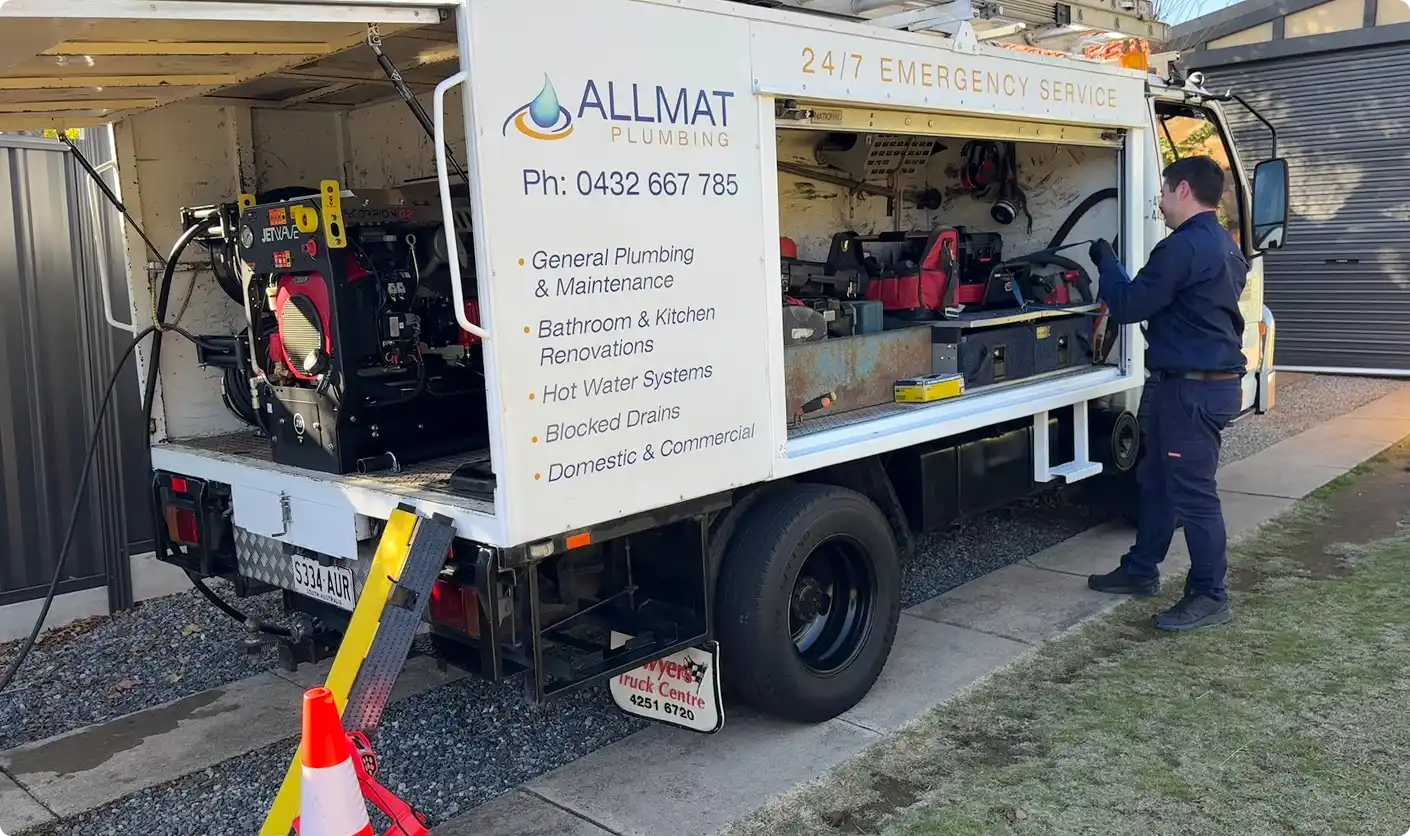
Stormwater drain cleaning clears silt, leaf litter, sand and tree roots out of the pipes carrying roof and surface water to the kerb or a legal discharge point. In Adelaide it is done with a high pressure water jetter rather than an electric eel, because silt has to be flushed back out rather than bored through. What the job involves depends on the length of the run, the access point and how compacted the material is. Your stormwater is not connected to your sewer, and in South Australia it is illegal to join the 2 systems.
Related: Blocked Drains · Hydrojet Drain Cleaning · CCTV Drain Inspection
Stormwater is not your sewer, and it fails differently
Adelaide runs 2 separate underground drainage systems and they never meet. The sanitary sewer takes everything from the toilets, basins, showers and laundry to an SA Water main and on to a treatment plant. The stormwater system takes roof water from your downpipes and surface water from paving and yard grates, and discharges it untreated to the kerb, a council drain or an approved soakage point.
- Ownership: the drainage inside your boundary is yours, up to the legal point of discharge. The street network past it belongs to your council, not SA Water.
- No vents, no gullies, no warning. A blocked sewer announces itself with gurgling and a surcharge outside. Stormwater stays silent until it overflows during rain.
- Different material. Sewer blockages are paper, fat and roots. Stormwater blockages are silt, sand, roof grit and leaf litter, which changes the clearing method.
- Untreated discharge. Whatever enters a stormwater grate reaches a creek, the Torrens or the gulf untreated, so drain cleaner, paint, solvent and oil must never go into one.
Why Adelaide stormwater drains block
Adelaide gets a long dry summer, then sharp winter fronts and short downpours that drop a month of rain in an afternoon. Stormwater systems here sit empty and dusty most of the year, then get asked to move everything at once.
- Silt and roof grit. Every dry month deposits fine material in the low points and bends, it compacts, and the first heavy front pushes a summer of leaf litter on top.
- Leaf load from the trees that make the inner suburbs desirable. Plane, jacaranda, ornamental pear and liquidambar all drop heavily into gutters feeding a 90mm pipe.
- Tree roots. Stormwater pipe is the easiest target on many properties: shallow, holding water after rain, and in postwar suburbs often terracotta laid in short jointed lengths.
- Cracked and dropped sections. Terracotta stormwater from the 1950s and 1960s is thin walled and brittle, and 60 years of clay movement plus vehicle loading over a driveway cracks it.
- Charged systems that were never flushed. Where the outlet sits below the pipe, the line stays permanently full, so sediment settles and never leaves.
- Silt arrestor pits nobody has opened, and soakwells silted solid. A pit exists to catch material, so it fills, and a full pit feeds the line instead.
The Adelaide consequence nobody warns you about
Most of Adelaide sits on highly reactive clay soils that swell when they take on water and shrink hard when they dry out, with movement measured in tens of millimetres. Every slab and footing here is designed around that behaviour, and they all share 1 assumption: that soil moisture around the perimeter stays reasonably even.
A blocked or broken stormwater drain destroys that assumption. Roof water that should have travelled to the kerb instead discharges at 1 point beside the footing. That corner stays wet all winter while the rest of the perimeter dries normally, and the differential movement is what cracks cornices, sticks doors and opens step cracks in brickwork. Homeowners spend serious money on underpinning for damage that started as a blocked stormwater drain.
- Overflowing downpipes and surcharging pits put water exactly where footing design says it must not go, hard against the wall.
- A cracked underground line does the same invisibly, and all year rather than only during rain.
This is why we treat stormwater as a structural service, and why the recommendation is sometimes to fix the fall or the discharge point rather than clean the pipe again.
How a stormwater drain actually gets cleaned
Stormwater is cleared with water, not a cutting head on a cable. An eel is built to cut through a solid obstruction in a sewer, and dropped into a silted stormwater line it bores a neat hole through the sediment, restores flow for a fortnight, and leaves the blockage there. A jetter does the opposite: rear-facing jets drive the hose up the line and drag the material back down.
- Find the access. Stormwater rarely has inspection openings, so entry is a downpipe, a surface grate, a silt pit or the kerb outlet. Working out which pipe goes where comes first, and on a renovated property that is half the job.
- Clear the pits by hand. Flushing a line into a pit that is already full only relocates the problem.
- Jet the line: a flushing head for silt and sand, a rotary head for compacted material, a root cutting head where roots are the cause.
- Check the outlet. The line is not clear until water runs freely from the kerb at full flow, not a trickle.
- Run the camera where it has blocked before. CCTV with a surface locator shows whether this was ordinary silt, a root entry, a dropped joint or a crushed section, and marks its position and depth.
Timing matters more here than on sewer work. Clear stormwater before the season it has to perform in, which in Adelaide means autumn, once the deciduous leaf has dropped and before the first real front. Clearing a line mid-downpour is emergency work, it costs more, and the camera sees nothing through moving water.
When cleaning is not the answer
Jetting is the right tool for a line full of silt, sand or roots. It is not the answer to every stormwater problem, and where something else is going on we will tell you rather than book another clean.
- A suburban home does not need a stormwater maintenance contract. Clear the gutters, lift the pit lids once a year, and call when something stops working.
- If the gutters are packed and the line is silted, clearing only the line buys a season.
- Do not reline a pipe that is structurally sound and simply full of silt. Patch relining is for a cracked, root-invaded or misaligned section, not a dirty one.
- Where the defect sits past the boundary in the council network, that is a council repair. Located camera footage is what gets that accepted.
Marc is a licensed plumber and gas fitter of 20 years, and Allmat runs its own jetter and RIDGID SeeSnake camera, so the inspection and the clearing happen on the same visit. You get a text with an arrival time before we set off, and a price discussed before work starts.
Other blocked drains pages
- Blocked Toilet: Blocked toilets cleared properly, from a plunger-and-auger job at the pan through to jetting a root-blocked sewer drain. We tell you plainly when it is a job you can finish yourself.
- Tree Root Removal: Root cutting, high pressure jetting and CCTV diagnosis for root-invaded sewer and stormwater drains, with a straight answer on whether a clearing cycle or a permanent repair is the better spend.
Questions we get asked
How often should stormwater drains be cleaned?
Most Adelaide homes never need the underground line cleaned on a schedule. What does need annual attention is the accessible part: clear the gutters and lift the lids on any silt pits or sumps in late autumn, once the deciduous leaf has dropped. Book a jetting run only where the line has actually blocked, where the property carries heavy overhanging trees, or where a charged system keeps the pipe permanently full so silt has nowhere to go. An ordinary suburban roof does not need an annual jetting contract.
Who is responsible for a blocked stormwater drain, me or the council?
The drainage inside your property boundary is yours, right up to the legal point of discharge, which for most Adelaide homes is the kerb outlet. The street stormwater network beyond that belongs to your council. Note that SA Water is not involved: it runs the water main and the sewer, not residential stormwater. Where a defect is found close to the boundary, a located camera inspection giving distance and depth from a fixed reference is what settles which side it sits on, and it is worth having before anyone digs.
Can I put drain cleaner down a stormwater drain?
No. Stormwater is discharged untreated into creeks, the Torrens and eventually the gulf, so anything poured into a grate or a downpipe goes straight into a waterway. It also will not work: caustic products are formulated to break down fat and organic matter in a sewer, and stormwater blockages are silt, sand, grit and roots, which they do nothing to. Water at pressure is the correct tool and the only one that removes the material rather than moving it along.
Why does my stormwater drain only overflow in heavy rain?
Either the line is partly restricted and still copes with light rain, or the system is undersized for the roof area feeding it. A camera settles it in 20 minutes. A restricted line shows silt, root entry or a dropped joint, and jetting fixes it. A clean line at correct fall that still surcharges is a capacity problem, and the answer is another outlet, a larger discharge line or surface drainage, not more cleaning. Jetting a pipe that is already clear will not change how it behaves in the next downpour.
Can a blocked stormwater drain damage my house?
Yes, and on Adelaide soils that is the real risk rather than the puddle. Reactive clay swells when wet and shrinks when dry, and footings are designed assuming perimeter moisture stays reasonably even. Roof water discharging at 1 point beside a footing keeps that corner saturated while the rest of the house dries out, and the resulting differential movement causes step cracking in brickwork, sticking doors and cracked cornices. Repairing that costs many multiples of clearing the drain.
What is a charged stormwater system and why does it silt up?
A charged, or wet, system is used where the outlet sits lower than the pipe run, typically on a flat block. The line is sealed and stays permanently full of water, and the head of water in the downpipe drives flow out at the discharge point. It works well and it is entirely normal. The catch is that because the water never drains away, fine sediment settles out and stays there. A charged system should be built with a flushing point at its low end, and that is the access we use to jet it clean.
Suburbs we cover for stormwater drain cleaning
You might also find this useful
- Stormwater Drain Maintenance in Adelaide: The Autumn ChecklistAdelaide gets most of its rain between May and September, which means a stormwater system has all summer to silt up before its first real test. Here is the autumn checklist, the faults worth paying to fix, and the ones you can safely leave alone.
- Do Supermarket Drain Cleaners Damage Your Pipes?Most pages on this subject say never use them, which readers do not believe because the bottle sometimes works. Here is the accurate version: what is in it, what it damages, the narrow case where it is a fair choice, and the symptoms that mean it will never help.
- Pipe Relining vs Pipe Replacement: How to Choose the Right RepairPatch relining and excavation are 2 tools for 2 different faults. The pipe conditions that decide it, what the camera has to show before a liner is an option, and when digging is genuinely the better repair.
- Tree Roots in Pipes: The Adelaide Guide to Stopping the DamageA drain that blocks every year around the same time is not being overused. It is taking tree roots through an open joint. Here is how roots actually get in, which Adelaide trees do it, what each fix genuinely buys you, and the treatments that waste money.
- Blocked DrainsBlocked sewer, toilet, sink and stormwater drains cleared across Adelaide with a jetter and an electric machine, then filmed with a CCTV camera so you find out what caused it.
- Hydrojet Drain CleaningHigh-pressure water jetting that removes roots, fat, scale and silt from sewer and stormwater lines, followed by a camera run so you know what condition the pipe was actually in.